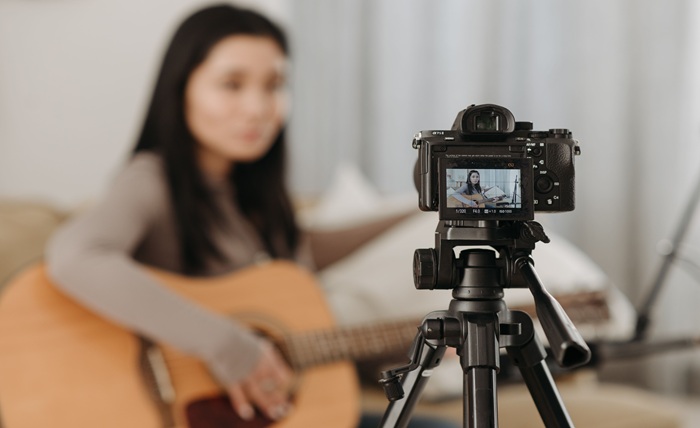
A UGC video is rarely finished when the creator sends the first edit. The same footage may need to work in several short-form feeds, organic placements, and paid advertising campaigns, each with different viewing behavior, pacing, interface elements, and conversion goals. The task is not simply to resize one file. It is to rebuild the same core message for several contexts.
A studio therefore treats the original recording as a source package rather than a final asset. The editor may take the same introduction, product demonstration, reaction, proof point, and call to action and arrange them into several versions. Even a small interaction, such as prompting users to read more after the main message, has to be placed differently depending on whether the content is designed for organic discovery or direct-response advertising.
Marketers can use a meme creator online to develop additional visual content that supports UGC campaigns and short-form advertising.
The Original UGC Video Is Built as Modular Footage
A studio that expects one recording to serve several channels usually plans for adaptation before filming begins.
Instead of asking the creator to record one continuous script, the team breaks the concept into blocks. These may include three hooks, a problem statement, two product demonstrations, one personal reaction, a proof point, an objection, and several calls to action.
This modular approach creates editing flexibility. If one platform needs a faster opening, the editor can replace the first three seconds without changing the rest of the video. If another placement requires more explanation, an extra demonstration can be inserted.
The production team is therefore not creating one video. It is creating a library of interchangeable parts.
The Hook Changes First
The opening usually requires the most adaptation because user behavior differs between organic feeds and paid placements.
In an organic feed, the creator may need to create curiosity before revealing the product. A question, unfinished statement, unexpected result, or problem can give the viewer a reason to continue.
A paid ad often needs to establish relevance faster. The user did not choose to watch the content, so the video may need to identify the problem, category, or benefit within the first seconds.
For example, an organic version might begin with, “I did not expect this to change how I use it.” An ad version may begin directly with, “If you keep having this problem, this is what I changed.”
The footage may be almost identical, but the framing of the first seconds changes the viewer’s reason for staying.
Pacing Is Adjusted for Viewing Behavior
One edit rarely has the correct rhythm for every channel.
Some short-form environments reward fast movement between ideas. Pauses are shortened, demonstrations appear earlier, and repeated words are removed. Other placements allow more explanation because the viewer may already be interested in the topic.
Studios often create several duration ranges from the same footage. A short version may focus on the problem, solution, and result. A longer version may add context, objections, and explanation.
The editor also decides how long each shot can remain on screen. A product close-up that works for four seconds in one version may need to be reduced to two seconds in another.
Pacing therefore becomes a performance variable rather than a purely stylistic choice.
Captions Need More Than Simple Transcription
On-screen text is another element that changes during adaptation.
Captions may be required because many users encounter short-form videos without sound. However, simply displaying every spoken word can overload the frame.
A UGC studio can use text to emphasize the parts that matter most: the problem, the result, a number, an objection, or the next action.
Caption placement also matters. Interface controls may cover parts of the screen, so text has to remain within safe areas. The same caption position cannot always be reused without adjustment.
The studio may also shorten written text while keeping the creator’s spoken explanation unchanged. This gives the viewer two levels of information: a fast visual message and a more complete verbal one.
Organic Content and Ads Need Different Calls to Action
The same creator can deliver several endings because organic content and paid advertising often ask the viewer to do different things.
Organic content may end with a softer prompt designed to encourage comments, saves, profile visits, or further exploration. A paid campaign usually needs a more direct action linked to the campaign objective.
This distinction matters because an aggressive sales ending can make an organic video feel out of place. At the same time, a vague ending may weaken an ad designed to generate clicks or conversions.
Studios therefore record several calls to action during the same session. This allows the final line to be changed without reshooting the entire concept.
Paid Campaigns Require More Variants Than Organic Posting
Advertising introduces another layer of adaptation because the creative has to survive repeated exposure and testing.
A campaign may use several versions of the same UGC concept with different hooks, body order, captions, demonstrations, or endings. The goal is to identify which combination produces the strongest response.
For example, the studio may keep the creator and product footage constant while testing three openings. If one opening improves retention, it can then be tested with two different calls to action.
This process turns a single recording session into a matrix of creative combinations.
The value of the original UGC asset therefore depends less on the number of finished videos delivered and more on how many meaningful variations can be built from the footage.
Adaptation Should Preserve the Core Message
The greatest risk during multi-platform editing is changing so many elements that the original message becomes inconsistent.
A strong workflow keeps the central claim, product role, and creator perspective stable while adapting presentation variables around them.
The hook can change. The pacing can change. Captions, duration, shot order, and call to action can also change. But the viewer should still understand the same problem, solution, and reason to believe.
This is what makes one UGC shoot scalable. The studio does not force one finished video into every placement. It preserves the core idea while rebuilding the way that idea is delivered.
The result is not one video distributed everywhere. It is a family of related creative assets designed from the same source material, each optimized for the environment in which the audience will encounter it.